
Two very different soils sit under Ku-ring-gai, sometimes within a single street. Knowing which one you have changes almost every other decision.
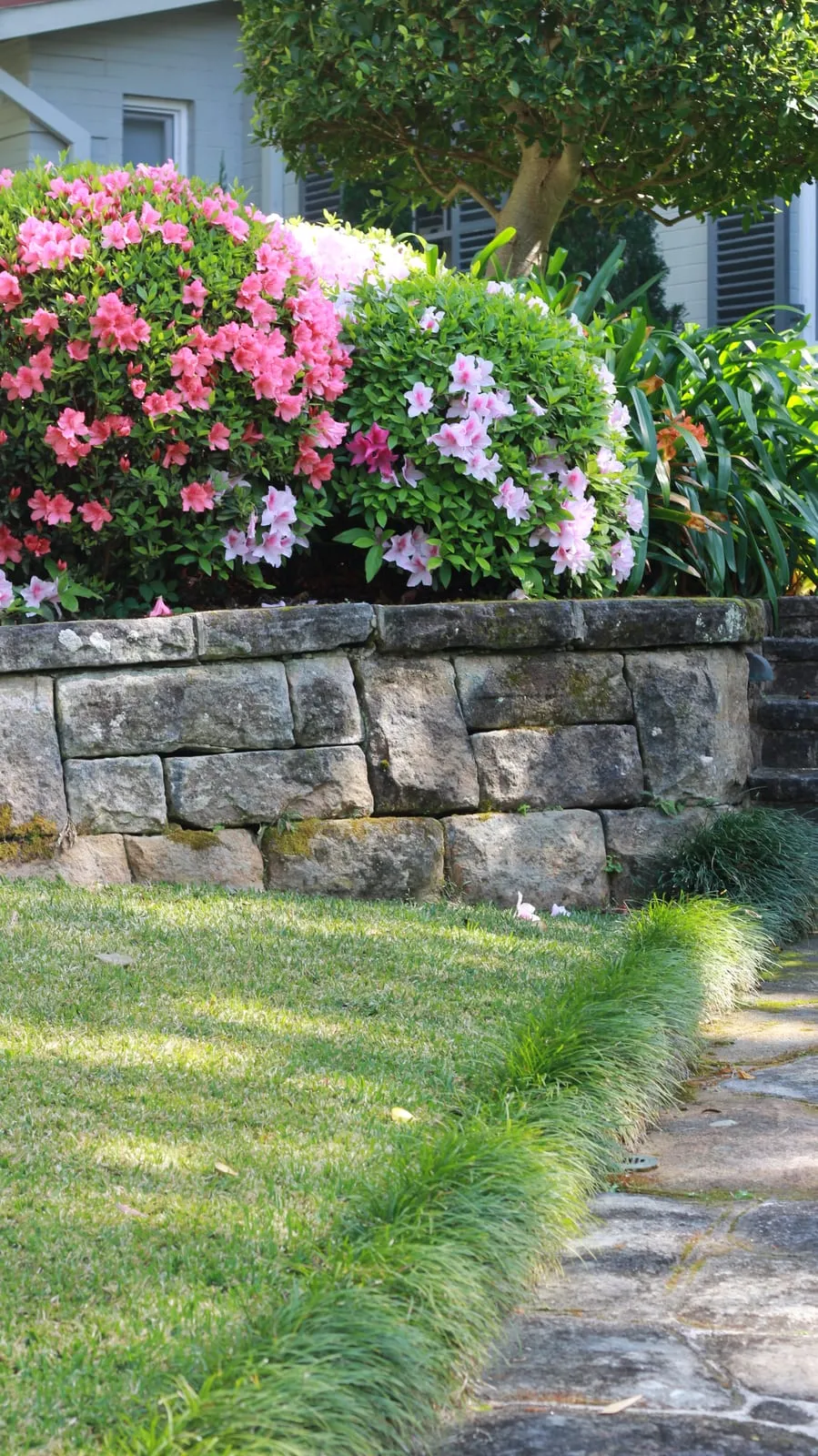
People often assume a suburb has a soil type. Ku-ring-gai has two, and the boundary between them can run through the middle of a street. It is the most useful thing to establish before you spend money on plants, because a planting scheme that thrives at the top of the road can fail three houses down the hill for reasons that have nothing to do with how well it was looked after.
Wianamatta shale caps the ridge. It follows the high ground the Pacific Highway and the rail line were built along, through Wahroonga, Turramurra, Pymble, Killara and Gordon. It weathers into a heavier clay loam that is more fertile and holds moisture well. That fertility is exactly why the ridge was cleared for housing first, and why the Blue Gum High Forest that once grew on it is now an endangered community surviving in fragments.
Hawkesbury sandstone takes over as the land falls away on either side. It dominates the gullies below Lindfield, the country running east from Roseville toward Middle Harbour, and the bushland edges out past St Ives. It weathers into a shallow, sandy, acidic soil that is low in nutrients and drains very sharply.
Neither is better. They simply demand different things, and most disappointing gardens here are gardens being managed as though they sat on the other one.
The instinct is to fight it by importing enough soil to make it behave like a loam. On a small bed that can work. Across a garden it is expensive, and the organic matter burns off quickly in a warm, well-aerated sandy soil, so it becomes a subscription rather than a fix.
The better strategy is to improve the beds you use intensively and plant to the soil everywhere else. Sandstone country grows superb gardens when you work with it: banksias, grevilleas, westringia, correa, crowea, lomandra, dianella and leptospermum are all at home. They also look right against the bushland many of these blocks back onto.
Practical points that matter here. Add organic matter regularly rather than once, because it disappears faster than you think. Sandy soils frequently turn hydrophobic, shedding water off the surface while staying dust dry underneath, and a soil wetting agent genuinely fixes this. Mulch is not decoration on this soil, it is the main thing standing between your plants and evaporation. And keep phosphorus away from the natives: banksias, grevilleas and hakeas are damaged by ordinary fertiliser and need a low-phosphorus native formulation.
You have the fertility. What you are managing is structure and drainage.
The most common mistake is digging a generous planting hole in clay, backfilling it with lovely friable compost, and creating a bathtub. Water flows in through the soft backfill, hits the clay wall, and sits there until the roots rot. Where drainage is marginal, plant high instead: raise the bed, mound the planting position, and let the surplus water run away rather than trying to make a hole drain downward through clay that will not cooperate.
Do not work clay when it is wet. Digging or walking on saturated clay smears and compacts it, and you can undo a season of improvement in an afternoon. Test before buying gypsum, using the glass-of-water method in the questions below, because it only helps dispersive clay. On everything else, compost, mulch and time are what build structure. Compaction is worth checking on any block that has had building work: a driveway's worth of truck traffic across a lawn leaves clay that no amount of fertiliser will rescue until it is physically relieved.
The reward is that shale soils grow the classic North Shore garden beautifully. Camellias, magnolias, hydrangeas, roses, citrus and lilly pilly all perform once drainage is sorted.
Mulch at 50 to 75mm, coarse enough to let water through, kept clear of trunks and stems. Test pH before applying lime or dolomite, and never lime around camellias, azaleas or blueberries, which want the acidity you would be removing. Leave fallen eucalypt and brush box leaf litter in the garden beds where you can, since it is free mulch that suits the soil it came from. And resist spreading imported soil over the root plate of an established tree, which suffocates the surface roots the tree depends on.
If you would rather know exactly what you are working with, soil assessment is part of our horticulture services, and soil preparation is built into our landscaping work rather than treated as an optional extra. For a garden being reworked from the beginning, garden design starts with what the ground will actually support.
Dig a hole and roll a moist handful between your fingers. Gritty, pale grey or yellow soil that will not hold together, often with sandstone fragments in it, is a sandstone soil. Sticky orange or red-brown soil that rolls into a ribbon is a shale clay. Position is a good second clue: the ridge along the highway is generally shale, and the ground falls away into sandstone country on either side.
Only some clay. Gypsum works on dispersive clay, and does very little on the rest. Test it first: drop a dry crumb of soil into a glass of rainwater and leave it. If the water goes cloudy as the crumb disperses, gypsum will help. If the crumb simply falls apart and the water stays clear, your money is better spent on compost and mulch.
Most likely phosphorus. Plants in the Proteaceae family, including banksias, grevilleas, hakeas and waratahs, evolved on phosphorus-poor sandstone soils and are damaged by the phosphorus levels in ordinary garden fertiliser. Use a fertiliser specifically formulated as low phosphorus for native plants, and keep general-purpose feed away from that part of the bed.
More on local conditions: shade-tolerant plants for a North Shore canopy and when to prune on the North Shore.
Request a quote for a horticultural assessment of your garden. We reply the same day.